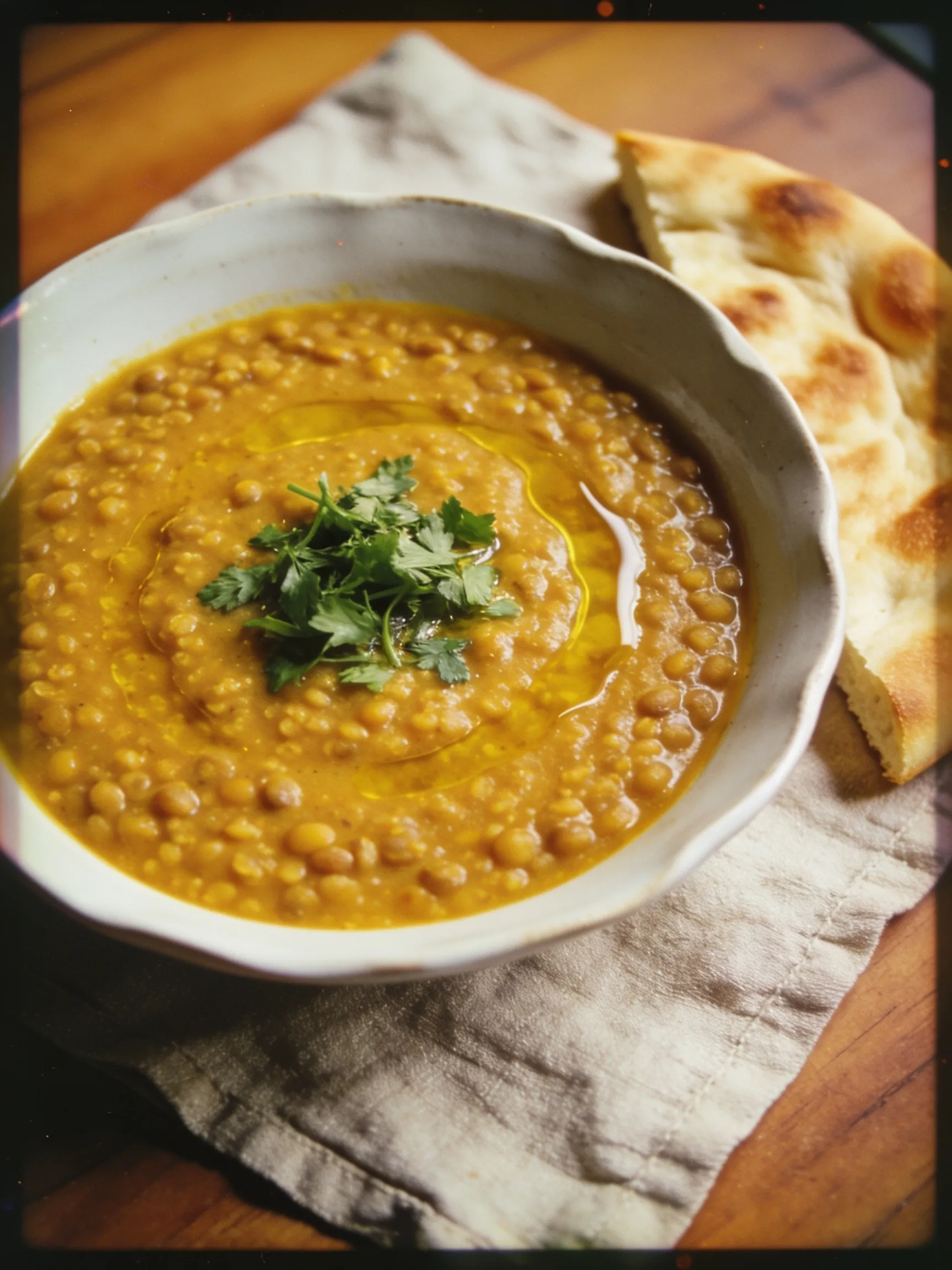
What is addasi?
Addasi is one of the most beloved Persian breakfast dishes — a thick, comforting lentil stew that has been eaten across Iran for centuries. It is traditionally served on weekend mornings with warm bread, fresh herbs, and yogurt. The name comes from "adas," the Persian word for lentil. What makes addasi distinctive is not the spice list but the onions — deeply savory, slowly cooked until golden, they form the flavor foundation that no shortcut can replicate.
Instructions
- 1Soak the lentils (optional but recommended). Place the lentils in a large bowl and cover with warm filtered water by at least 2 inches. Stir in the lemon juice or apple cider vinegar and let soak for 8 to 12 hours. Drain and rinse well before cooking. Soaking improves digestibility and helps the lentils cook more evenly.
- 2Saute the aromatics. Heat the olive oil, butter, or ghee in a heavy-bottomed pot over medium heat. Add the onion and cook for 8 to 10 minutes, stirring occasionally, until soft and lightly golden. Do not rush this step — the onions are the foundation of the flavor. Add the garlic and cook for another 30 seconds. Stir in the turmeric and black pepper, cooking just until fragrant. If using tomato paste, stir it in now and cook for 1 to 2 minutes to deepen its flavor.
- 3Simmer. Add the lentils, broth or water, bay leaves, and potatoes and carrots if using. Bring to a gentle boil, then reduce the heat to low. Cover partially and simmer for 35 to 45 minutes, or until the lentils and vegetables are completely tender. Stir occasionally, adding a splash of broth if needed.
- 4Finish. Remove the bay leaves. For a creamier texture, use an immersion blender to blend about one third of the soup, leaving plenty of whole lentils for texture. Stir in the salt if using and a squeeze of fresh lemon juice. Add cinnamon or bloomed saffron now if using. Taste and adjust seasoning.
- 5Serve. Ladle into bowls and finish with a generous drizzle of extra virgin olive oil and a squeeze of fresh lemon juice. This is the traditional way to serve addasi and makes a real difference to the final flavor.
Nourished tip: Use homemade chicken or beef broth instead of water for a richer, more nourishing addasi. The broth adds depth of flavor and extra minerals that make this a genuinely complete meal.
Traditional Serving Suggestions
- A generous drizzle of extra virgin olive oil and a squeeze of fresh lemon juice over each bowl
- Warm sangak, barbari, or sourdough bread
- Plain full-fat yogurt
- Fresh herbs (sabzi khordan)
- Sliced cucumbers and tomatoes
Adaptations by Age
| Age | How to serve |
|---|
| 9–12 months | Omit salt. Blend until mostly smooth or mash with a fork depending on your baby's stage. Stir in a teaspoon of butter, ghee, or olive oil before serving. Serve with soft avocado or plain whole-milk yogurt if dairy has been introduced. |
| 12–18 months | Serve with a soft texture — partially blended is ideal. Offer with warm soft bread for dipping. |
| 18 months+ | Serve as a thick stew with bread, yogurt, and fresh herbs alongside. Finish with olive oil and lemon. |
| Family | Serve with warm bread, yogurt, fresh herbs, cucumbers and tomatoes, and a generous drizzle of olive oil and fresh lemon juice over each bowl. |
Storage
🧊 Fridge
Up to 2 days. Add a splash of broth or water when reheating as the lentils will continue to absorb liquid.
❄️ Freezer
Up to 3 months in portioned containers. Thaw overnight in the fridge and reheat gently with a splash of broth.
Tips
- Do not rush the onions. Taking 8 to 10 minutes to cook them until lightly golden creates the deep, sweet flavor that makes addasi so comforting. This single step is what separates a good addasi from a great one.
- Always finish with olive oil and lemon juice. This is the traditional way to serve addasi — it brightens the whole dish and adds healthy fat that helps absorb the turmeric.
- Use homemade broth. It makes a noticeable difference in flavor and adds minerals and collagen that water cannot provide.
- Blend only part of the soup. Blending one third gives you a creamy consistency while keeping the satisfying texture of whole lentils.
- Tomato paste is optional. Many Iranian families make addasi without it. Try it both ways and see which your family prefers.
- Cinnamon is a family variation, not a requirement. Start with turmeric and salt, taste, then add cinnamon only if you want that extra warmth.
- Add saffron at the end — bloomed in a tablespoon of warm water for 5 minutes before stirring in. It adds a beautiful golden color and a subtle floral note for special occasions.
Making it Fun
🍞 The bread ritual — addasi is meant to be eaten with warm bread torn into pieces and dunked in. For toddlers, soft pieces of sangak or barbari are the perfect vehicle. It is one of those dishes where the ritual of eating is part of the meal.
🥄 The baby bowl — blend a small portion separately for baby, stir in a teaspoon of butter or ghee, and serve alongside the family meal. Everyone eats the same thing, just at different textures. That is the heart of traditional Persian family eating.
🌿 Weekend breakfast — addasi is traditionally a weekend breakfast dish in Iran. Making it part of a Saturday morning routine — with tea, fresh herbs, and warm bread — is one of the most authentic ways to bring Persian food culture into your family's life.
Why This Nourishes
💪Plant Protein
Lentils are one of the richest plant sources of protein — essential for growth and muscle development in the first years of life
🩸Iron
Non-heme iron from lentils — best absorbed alongside vitamin C from the lemon juice served with this dish
🌿Folate
Lentils are exceptionally rich in folate — critical for cell development, DNA synthesis, and healthy growth
🔥Turmeric
A traditional anti-inflammatory spice used across Persian cooking for centuries — absorbed best when eaten with fat
🦴Broth
Homemade broth adds minerals, collagen, and gut-supportive gelatin — turning a simple lentil stew into a genuinely nourishing meal
The content on this site is based on personal experience and research and is intended for informational purposes only. It is not a substitute for professional medical advice, diagnosis, or treatment. Always consult your pediatrician or a qualified healthcare provider before introducing new foods or making changes to your baby's diet.