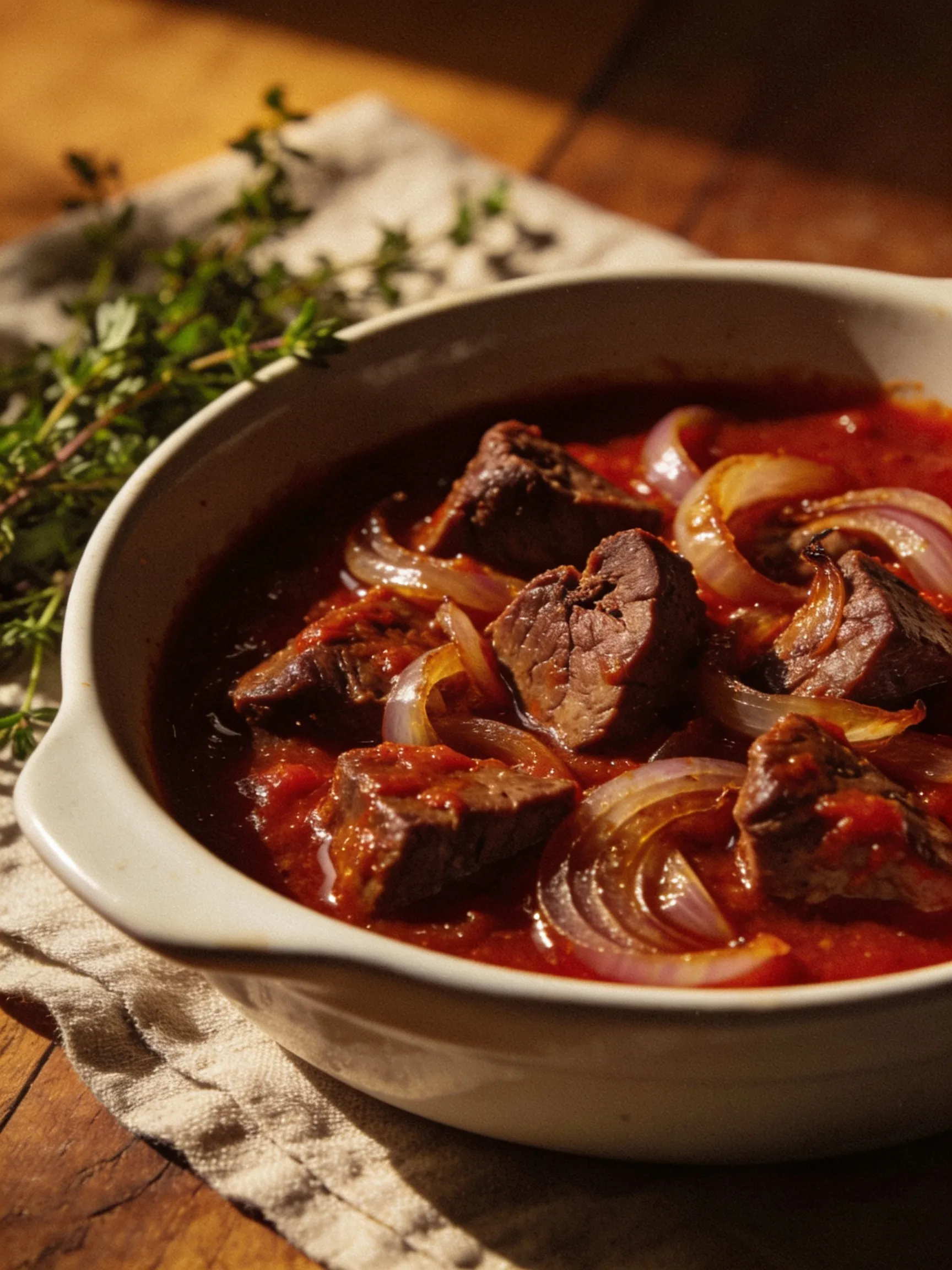
Why lamb heart?
Lamb heart is one of the most overlooked cuts of meat — and one of the most rewarding once you try it. It is milder than beef heart, naturally tender when braised low and slow, and rich in nutrients that are difficult to find in muscle meat alone. Because the heart is a muscle rather than a filtering organ, it has a clean, deep flavor that pairs beautifully with the simple Persian spices that have complemented it for centuries. Slow braising transforms it completely — what starts as a firm, dense cut becomes melt-in-your-mouth tender after two and a half to three hours of gentle cooking.
Instructions
- 1Trim the lamb hearts — remove excess fat, valves, and any tough connective tissue. Keep the hearts whole or halved for braising. Rinse well and pat dry. Braise whole and shred or chop after cooking for the best texture, especially for younger babies.
- 2Heat the butter, ghee, or tallow in a non-toxic heavy-bottomed pan or pot over medium-high heat. Brown the hearts for about 2 minutes per side. Do not cook through — you are building color and flavor only. Transfer to a plate.
- 3Reduce the heat to medium. Add the sliced onion and cook for 8 to 10 minutes until golden. Add the garlic and turmeric and cook for another 30 seconds. If using tomato paste, stir it in now and cook for 1 minute.
- 4Return the hearts to the pot. Add the broth, bay leaves, cinnamon, and saffron if using. Bring to a gentle simmer.
- 5Cover and cook on low heat for 2½ to 3 hours, until completely fork tender and melt-in-your-mouth soft. Stir occasionally and add a splash of broth if the pot looks dry. The longer cook time ensures the texture is appropriate for younger children.
- 6Remove the hearts and let cool slightly. Trim away any remaining tough connective tissue. Finely chop, shred, or slice depending on age and preference. Return to the braising liquid.
- 7Remove the bay leaves. Stir in the lemon juice. Season with salt and pepper if serving older children or adults.
Serving Suggestions
- Buttered Persian saffron rice
- Mashed sweet potatoes
- Creamy mashed potatoes
- Roasted carrots or root vegetables
- Steamed green beans
- Plain yogurt alongside
- Fresh herbs (sabzi khordan)
Adaptations by Age
| Age | How to serve |
|---|
| 9–12 months | Omit salt. Braise until extremely tender (closer to 3 hours). Finely mince or pulse briefly in a food processor. Mix with mashed potatoes, sweet potato, squash, or rice. Add a spoonful of the braising broth to keep it moist. |
| 12–18 months | Omit salt. Finely chop the braised heart into very small pieces. Mix into rice, mashed vegetables, or soft stews. |
| 18 months+ | Serve as small soft bite-sized pieces alongside rice and vegetables. The meat will be tender enough to cut with a spoon. |
| Family | Serve with all accompaniments seasoned with salt and pepper to taste. A squeeze of extra lemon before serving brightens the whole dish. |
Storage
🧊 Fridge
Up to 2 days in an airtight container. The flavor deepens overnight — this dish is often better the next day.
❄️ Freezer
Up to 3 months. Freeze the braised heart with its cooking liquid in portioned containers. Reheat gently over low heat.
Tips
- Braise the hearts whole or in halves — do not cube before cooking. Shredding or chopping after braising gives a better texture and prevents smaller pieces from drying out.
- Trimming the valves and connective tissue properly before cooking is the most important prep step — it ensures a clean flavor and tender result.
- Low and slow is non-negotiable. Three hours at a gentle simmer produces melt-in-your-mouth tenderness. Rushing the braise results in tough, chewy meat.
- Brown the heart well before braising — this step builds color and depth of flavor that carries through the entire dish.
- The dish tastes better the next day after the flavors have had time to meld overnight in the fridge.
- Ask your butcher to trim the hearts for you if you are new to preparing organ meats — most are happy to help.
Making it Fun
🍚 Mix it in — for younger babies, finely mince the braised heart and mix into familiar foods like rice, mashed potatoes, or soft vegetables. The mild flavor and tender texture blend in easily without changing the dish significantly.
🫙 Introduce gradually — start with a small amount mixed into a meal they already love. Lamb heart has a mild, meaty flavor that most children accept easily once they have tried it, especially after slow braising softens any sharpness.
🌿 Save the broth — use homemade lamb or beef broth for the richest result. The braising liquid becomes a deeply flavored sauce worth spooning over rice or potatoes for the whole family.
Why This Nourishes
⚡CoQ10
Heart is one of the richest dietary sources of coenzyme Q10 — a powerful antioxidant that supports cellular energy production
🩸Iron
Rich in heme iron — the most absorbable form — essential for brain development and preventing iron deficiency
💪Zinc
Supports immune function, healthy growth, and brain development throughout the first years of life
⚡Vitamin B12
Essential for nervous system development and healthy red blood cell production — abundant in heart muscle
🌿Selenium
An important antioxidant mineral that supports thyroid function and immune health — often lacking in modern diets
The content on this site is based on personal experience and research and is intended for informational purposes only. It is not a substitute for professional medical advice, diagnosis, or treatment. Always consult your pediatrician or a qualified healthcare provider before introducing new foods or making changes to your baby's diet.