Instructions
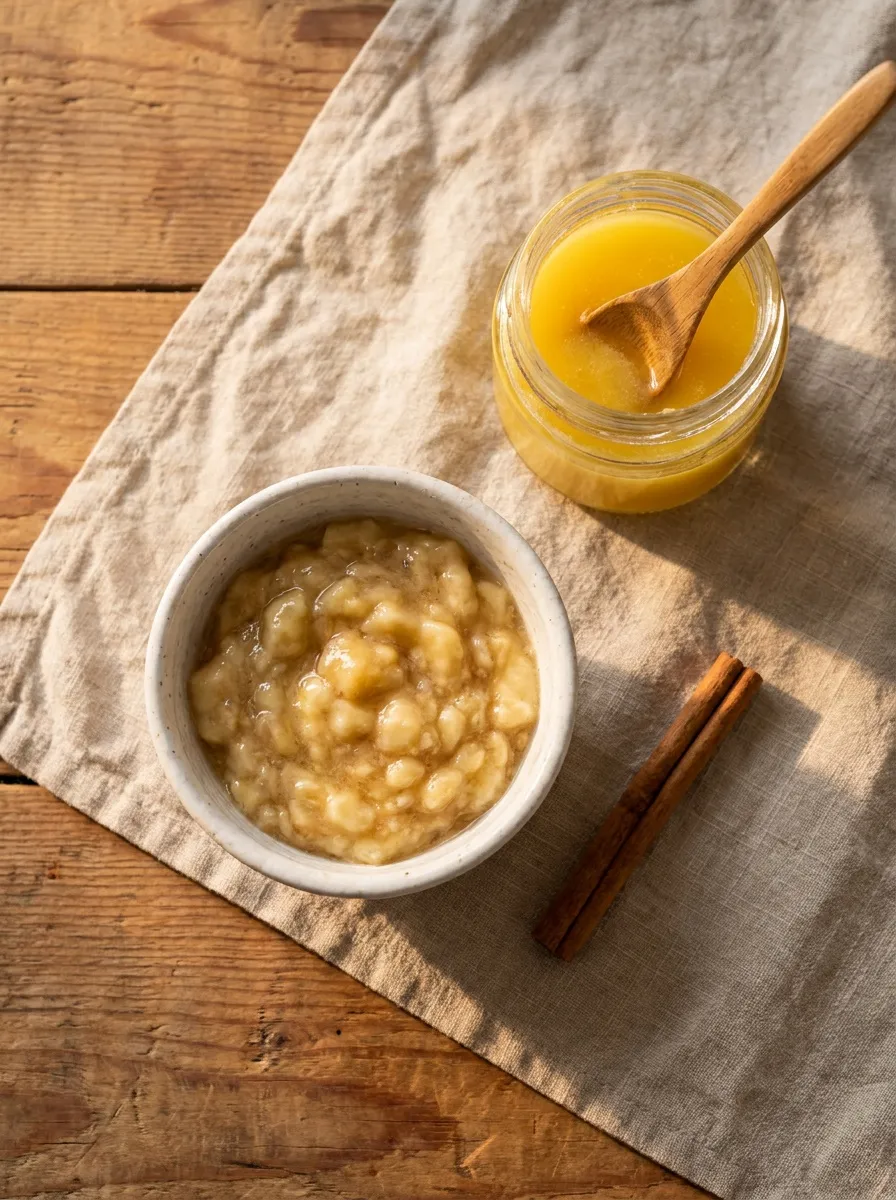
- 1Peel the banana and place in a small bowl.
- 2Mash thoroughly with a fork until completely smooth — no lumps for younger babies.
- 3Melt the ghee in a small pan over low heat. Pour over the mashed banana and stir until fully combined.
- 4Add a pinch of cinnamon if using.
- 5Let cool slightly, then serve. If too thick, add a teaspoon of breast milk, formula, or water to thin. Serve fresh — banana browns quickly once mashed.
How to Serve by Age
| Age | Texture | Ghee | Amount |
|---|
| 6–7 months | Very smooth mash, spoon fed | 2–3 drops (⅛ tsp) | 2–3 tbsp |
| 7–9 months | Smooth mash, spoon fed | ¼ tsp | 3–4 tbsp |
| 9–12 months | Slightly chunky mash or soft pieces | ½ tsp | 4–5 tbsp |
| 12 months+ | Soft banana pieces or whole small banana | ½–¾ tsp | As desired |
⚠️ Banana can cause constipation if given too frequently — balance with other fruits like pear or prune purée. Always introduce as a single new food and wait 3–5 days before introducing another.
Making it Fun
🍌 Let them smell it first — hold the banana close before mashing and let baby smell it. Scent is part of how babies learn to accept new foods.
🥄 Preload the spoon — load the spoon and hand it to baby at 6 months. They'll make a mess and love every second of it.
👶 Finger food at 9 months — soft banana pieces are one of the best early finger foods. Easy to pick up, impossible to choke on when ripe enough.
Why This Nourishes
⚡Quick Energy
Natural sugars in ripe banana provide fast, easily digestible energy for rapidly growing babies
🧠Healthy Fats
Ghee provides fat-soluble vitamins A, D, E and K, and supports brain development
🦴Potassium
Banana is one of the best dietary sources of potassium — essential for heart and muscle function
🌿Vitamin B6
Supports brain development and helps the body produce serotonin and norepinephrine
🔥Butyrate
Ghee is rich in butyric acid — a short-chain fatty acid that feeds and heals the gut lining
The content on this site is based on personal experience and research and is intended for informational purposes only. It is not a substitute for professional medical advice, diagnosis, or treatment. Always consult your pediatrician or a qualified healthcare provider before introducing new foods or making changes to your baby's diet.