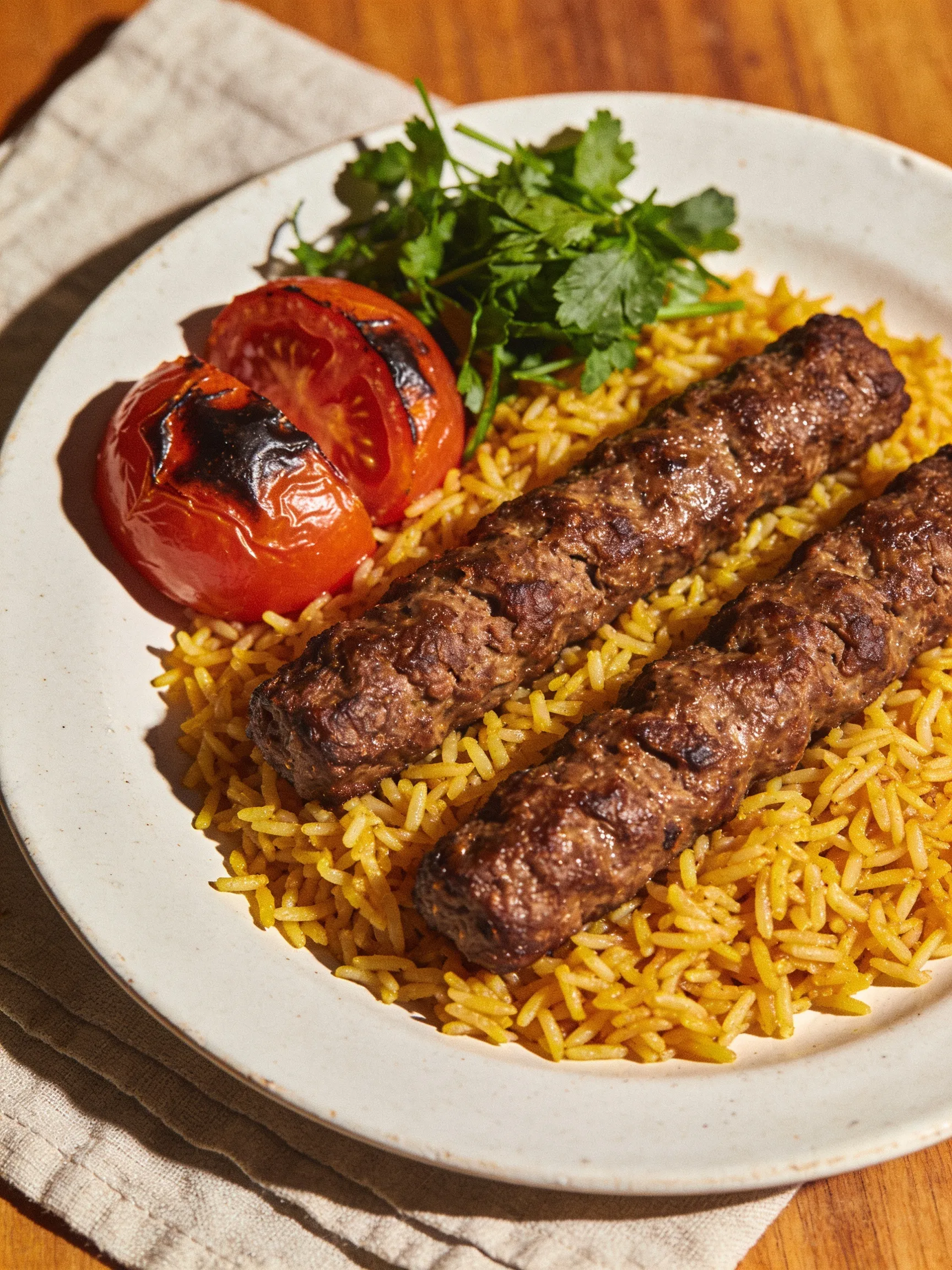
What is koobideh?
Koobideh is one of the most beloved dishes in Persian cuisine — a ground meat kebab shaped into long cylinders and cooked over high heat until juicy and lightly charred. The name comes from the Persian word "koobidan," meaning to pound or beat, referring to the traditional preparation of the meat. It is a staple at family gatherings, celebrations, and everyday dinners across Iran. Grated onion is the key — it keeps the meat incredibly moist and adds natural sweetness without overpowering the flavor of the meat itself.
Instructions
- 1Grate the onion finely and transfer to a clean kitchen towel. Squeeze out most of the liquid — leave just a little moisture to keep the kebabs juicy.
- 2Combine meat, onion, garlic, turmeric, salt, pepper, cinnamon, saffron, and herbs in a large bowl if using. Mix with your hands for 2 to 3 minutes until the mixture becomes slightly sticky.
- 3Cover and refrigerate for 30 to 60 minutes if time allows — this helps the koobideh hold its shape and allows the flavors to meld. If you are short on time, you can skip this step.
- 4Divide into 8 to 10 portions. Shape each portion into a long cylinder about 3 to 4 inches long and 1 inch wide. Cook directly in the pan — no skewers needed.
Option A — Grill
- 5Cook over medium-high heat for 4 to 5 minutes per side until cooked through and lightly charred on the outside.
Option B — Skillet
- 5Heat a cast-iron or nonstick pan over medium heat and add a generous amount of ghee, butter, or tallow. Place the koobideh in the pan and cover with a lid. Cook for 10 to 15 minutes until the inside is cooked through. Remove the lid, increase the heat to medium-high, and cook each side for 5 to 6 minutes until nicely browned.
Simple Persian Yogurt Sauce
- 1 cup full-fat Greek yogurt
- 1 tsp lemon juice
- 1 tsp extra virgin olive oil
- 1 tbsp finely chopped dill (optional)
Mix all ingredients together and refrigerate until ready to serve.
Traditional Serving Suggestions
- Buttered Persian saffron rice
- Grilled tomatoes
- Cucumber slices or mast-o-khiar
- Lavash or sangak flatbread
- Fresh herbs (sabzi khordan)
- A sprinkle of sumac over the finished kebabs
- Yogurt sauce alongside
Baby and Toddler Adaptations
| Age | How to serve |
|---|
| 6–8 months | Omit salt. Cook thoroughly. Finely crumble or mash with soft rice or plain yogurt. |
| 9–12 months | Omit salt. Finely minced pieces with soft rice and vegetables. |
| 12 months+ | Cut into bite-sized pieces. Serve with rice, grilled vegetables, and yogurt sauce. |
| Family | Full koobideh with all traditional accompaniments. |
Storage
🧊 Fridge
Cooked koobideh up to 2 days. Raw mixture up to 24 hours before cooking.
❄️ Freezer
Up to 3 months. Freeze raw shaped cylinders between layers of parchment paper. Cook directly from frozen or thaw overnight in the fridge.
Tips
- Squeezing the onion dry is the most important step — too much moisture and the koobideh will fall apart.
- Fat content matters — meat that is too lean will dry out. Aim for around 20% fat content for the juiciest result.
- Mix for 2 to 3 minutes until the mixture becomes slightly sticky — this is what helps it hold its shape.
- If using 100% lamb, one garlic clove is usually enough. For beef or a beef-lamb blend, two cloves work well.
- Bloomed saffron means soaking a few threads in 1 tbsp of warm water for 5 minutes before adding to the meat mixture.
- A sprinkle of sumac over the finished koobideh is the traditional finishing touch — it adds a gentle tartness that brightens the whole dish.
Making it Fun
🍚 One meal, every age — the whole family eats koobideh together. Baby gets a finely crumbled portion with soft rice, toddlers get bite-sized pieces, and adults get the full kebab with all the accompaniments. No separate cooking.
🌿 The herb platter — serve sabzi khordan (a plate of fresh herbs, radishes, and walnuts) alongside. It is how koobideh is traditionally eaten in Iran and introduces babies and toddlers to a wide variety of fresh flavors from early on.
🍋 The sumac finish — sprinkle sumac over the koobideh just before serving. Its deep red color and tangy flavor are distinctly Persian and something children recognize and grow to love as part of the meal ritual.
Why This Nourishes
🩸Iron
Ground lamb and beef are among the richest sources of heme iron — the most absorbable form for growing babies
💪Zinc
Supports immune function, healthy growth, and brain development — abundant in both lamb and beef
⚡Vitamin B12
Essential for nervous system development and healthy red blood cells — critical in the first two years of life
🌿Turmeric
A traditional anti-inflammatory spice used across Persian cooking for centuries
🧠Healthy Fats
The natural fat in grass-fed lamb and beef provides fat-soluble vitamins and supports brain development
The content on this site is based on personal experience and research and is intended for informational purposes only. It is not a substitute for professional medical advice, diagnosis, or treatment. Always consult your pediatrician or a qualified healthcare provider before introducing new foods or making changes to your baby's diet.