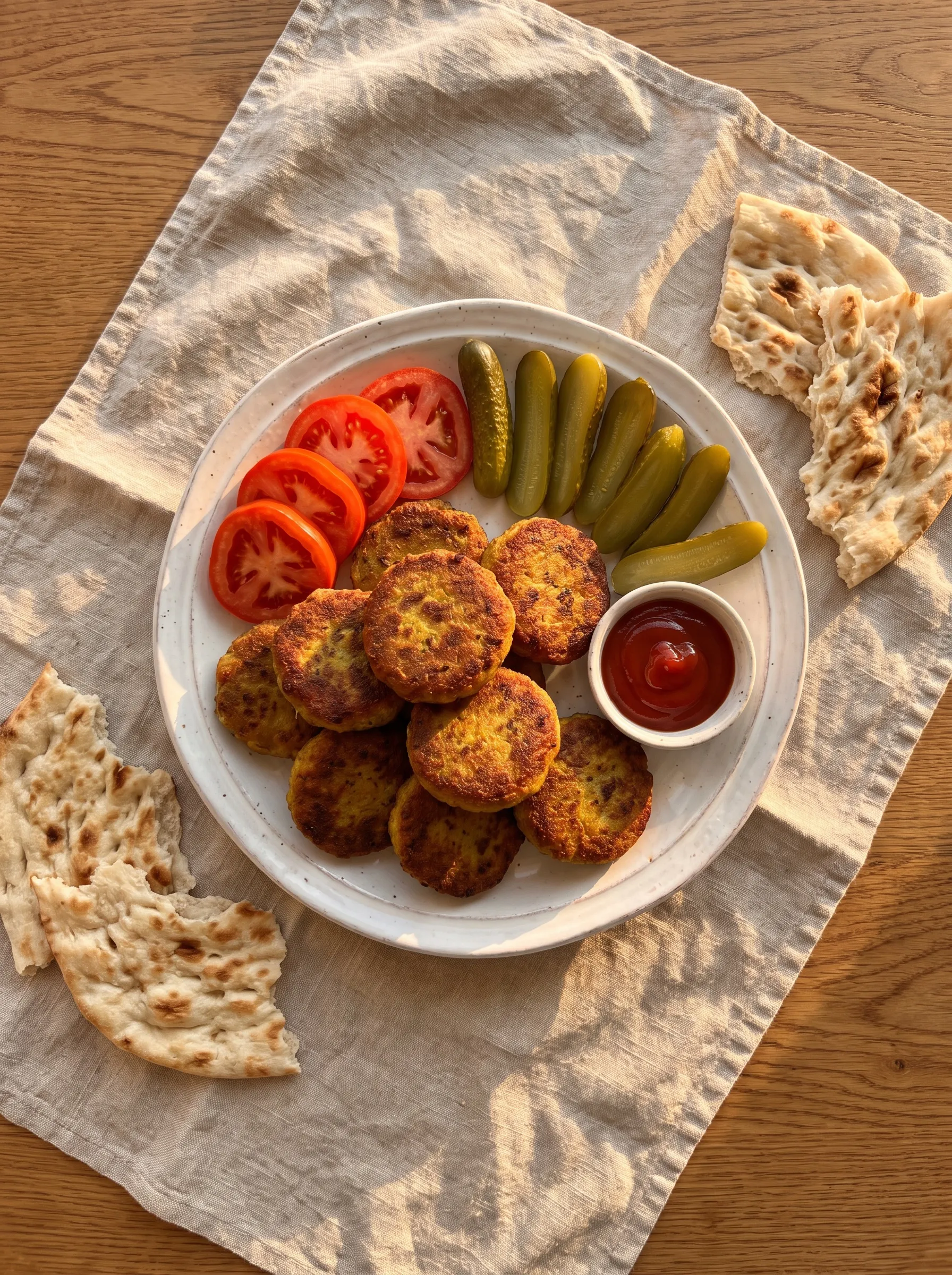
What is Kotlet?
Persian kotlet is a traditional Iranian meat and potato patty made with ground meat, raw potato, onion, and warm spices. Every Iranian household has its own version, often passed down through generations. The raw potato helps bind the mixture, keeps the patties moist, and gives kotlet its soft interior and golden crust.
Instructions
- 1Grate the potatoes and onion finely. Squeeze out as much liquid as possible from both using your hands or a clean cloth. This is the most important step, excess moisture will cause the patties to fall apart.
- 2Combine ground meat, grated potato, grated onion, egg, turmeric, cinnamon, and pepper in a bowl. Mix well with your hands until fully combined.
- 3Cover and refrigerate for 15–30 minutes. This helps the mixture hold together better when frying.
- 4Heat a generous amount of ghee, butter, or tallow in a large pan over medium heat. We use our Our Place Always Pan for this.
- 5With wet hands, take about 2–3 tablespoons of mixture and shape into a thin oval or round patty, no thicker than ½ inch. Thin patties are essential, too thick and the potato in the center won't cook through.
- 6Fry for 4–5 minutes per side until deep golden brown and cooked through. Do not press with a spatula, let them develop their crust undisturbed.
- 7Transfer to a plate lined with paper towels. Let cool slightly before serving to baby.
How to Serve by Age
| Age | How to serve | Amount |
|---|
| 9–12 months | Whole small patty as finger food — soft enough to squish between gums | 1 small patty |
| 12–18 months | Whole patty or cut in half, with dipping sauce or sliced tomato | 1–2 patties |
| 18 months+ | Family portions with traditional accompaniments | As desired |
⚠️ Always cook ground meat to an internal temperature of 160°F (71°C) with no pink remaining. The patty should feel soft when pressed gently between two fingers before serving to baby.
Storage
🧊 Fridge
Up to 2 days in a sealed container. Kotlet tastes just as good cold — perfect for next day's lunch tucked into flatbread.
❄️ Freezer
Up to 3 months. Freeze cooked patties between layers of parchment paper. Reheat in a pan over low heat to restore the crust.
Making it Fun
🫓 The traditional way — serve with lavash or barbari flatbread, sliced tomatoes, pickles, and french fries. This is how it's eaten across Iran and how your baby will grow up knowing it.
🥄 For younger babies — break into small soft pieces and serve with plain yogurt or mashed avocado for dipping. The yogurt adds a cooling contrast to the warm spices.
🍱 Make a double batch — Kotlet is one of the best foods to make ahead. It keeps well in the fridge and is equally delicious cold, making it ideal for packed lunches and on-the-go meals.
Why This Nourishes
🩸Iron
Ground beef, lamb, and bison are among the richest sources of heme iron — the most absorbable form for growing babies
💪Zinc
Supports immune function, healthy growth, and brain development — abundant in all three meat options
🌿Turmeric
A traditional anti-inflammatory spice that has been used in Persian cooking for centuries
⚡Potassium
From the potato — supports heart function, muscle development, and healthy fluid balance
🧠Healthy Fats
Ghee, butter, or tallow provide fat-soluble vitamins A, D, E and K essential for brain development
The content on this site is based on personal experience and research and is intended for informational purposes only. It is not a substitute for professional medical advice, diagnosis, or treatment. Always consult your pediatrician or a qualified healthcare provider before introducing new foods or making changes to your baby's diet.