This page contains affiliate links. I only recommend products I use and trust.
Why this works so well
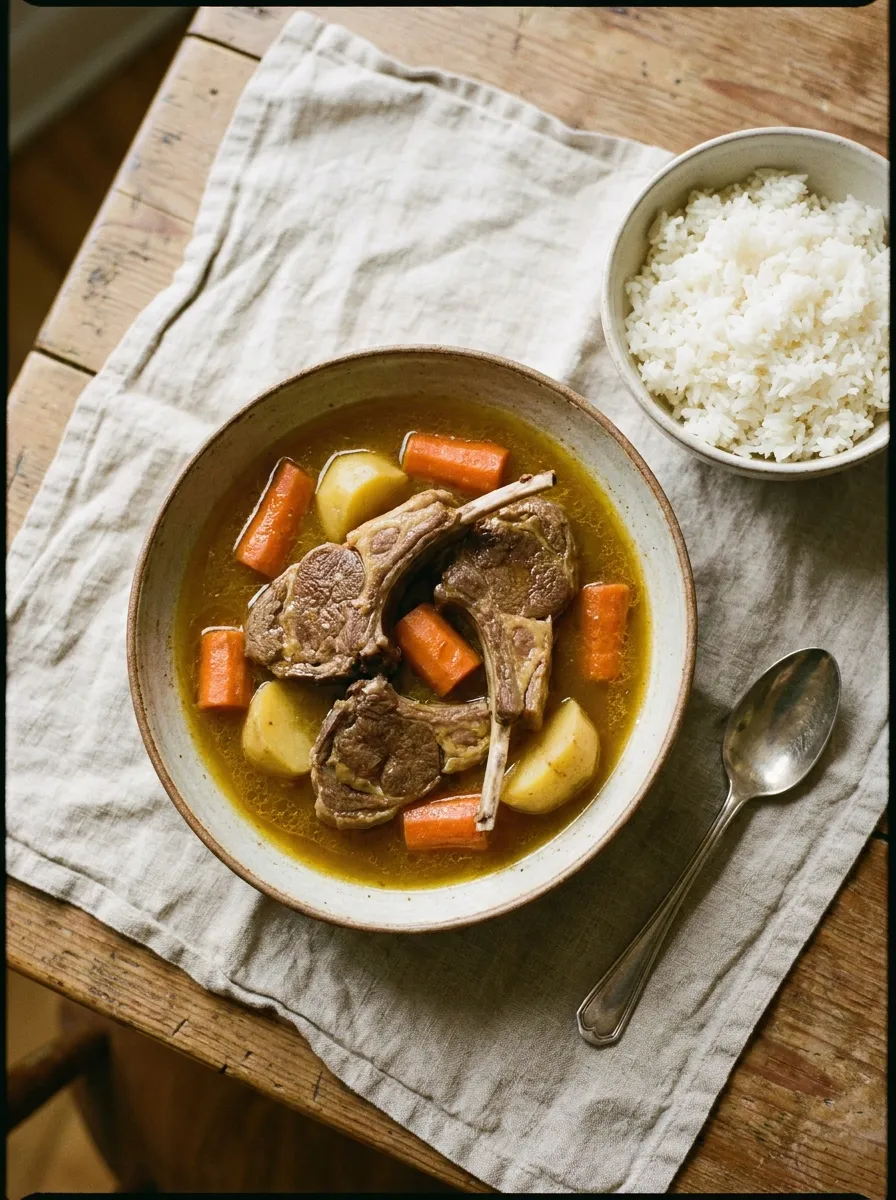
A rack of lamb cut into individual chops is an easy way to get bone-in lamb without needing a whole shoulder or leg. The bones and long simmer give the broth extra body and flavor, and by the time the stew is ready the meat pulls away easily, tender enough for the whole family, including your baby.
Instructions
-
1
Heat a little butter, ghee, or cooking fat in a large heavy-bottomed pot over medium heat. We use our Calphalon stainless steel stock pot for this.
-
2
Add the onion and cook until soft and translucent.
-
3
Add the turmeric and stir for about 30 seconds.
-
4
Add the crushed garlic and stir briefly.
-
5
Add the lamb pieces to the pot. Sprinkle the coriander, black pepper, cinnamon, and optional sumac over the lamb.
-
6
Brown the lamb on both sides, turning the pieces so they become coated in the onion, garlic, and spices.
-
7
Add enough filtered water to just cover the lamb.
-
8
Bring to a gentle boil, then reduce the heat to low. Cover partially and simmer gently for 3 to 4 hours, until the lamb is very tender.
-
9
About 1 hour before serving, add the carrots and salt to taste.
-
10
About 30 minutes before serving, add the potatoes and the lemon juice. If you prefer the potatoes very soft, you can add the carrots and potatoes together about 1 hour before the stew is finished instead.
-
11
Continue simmering until the vegetables are tender and the lamb easily pulls away from the bone.
-
12
Taste the broth and adjust the salt and lemon juice if needed.
-
13
Serve warm with rice, spooning some of the broth over the rice.
For baby: Remove the lamb meat carefully from the bone and check thoroughly for any small bones or fragments. Shred the lamb very finely and serve with soft carrot, potato, rice, and a little broth. Mash or soften everything as needed for your baby's eating skills.
Recipe Notes
- Lamb rack: A rack of lamb cut into individual chops works very well here. We use the Australian lamb rack from Costco. The bones add flavor to the broth during the long cooking time.
- Sumac: Optional. It adds a subtle tang, but the stew is still flavorful without it.
- Lemon: Add the lemon juice toward the end with the potatoes so the flavor stays fresh and bright.
- Vegetables: Adding the carrots earlier and potatoes later helps keep the potatoes from breaking down too much.
- Broth: Keep the simmer gentle. If too much liquid evaporates during the long cook, add a little more boiling filtered water.
Adaptations by Age
| Age | How to serve |
|---|
| 7 to 12 months |
Remove the lamb from the bone and check thoroughly for small bones or fragments. Shred very finely and serve with soft carrot, potato, rice, and a little broth, mashed or softened as needed. |
| Toddlers |
Serve shredded lamb with vegetables and rice, cut or mashed to a texture your toddler can manage. |
| Family |
Serve warm with rice, spooning the broth generously over the top. |
Storage
Why This Nourishes
🍖
Bone-In Lamb
Slow simmering helps break down connective tissue into gelatin, giving the broth a rich body and flavor
🥕
Carrots & Potatoes
Provide beta-carotene, potassium, and gentle fiber, softening beautifully during the long simmer
🍋
Lemon
Adds brightness and balances the richness of the slow-cooked lamb
🌿
Turmeric & Spices
Traditional warm spices that add depth and flavor to the stew
The content on this site is based on personal experience and research and is intended for informational purposes only. It is not a substitute for professional medical advice, diagnosis, or treatment. Always consult your pediatrician or a qualified healthcare provider before introducing new foods or making changes to your baby's diet.