First Foods · Slow-Cooked
✓ 8 Months+
Slow-Cooked Lamb Tongue for Babies & Toddlers
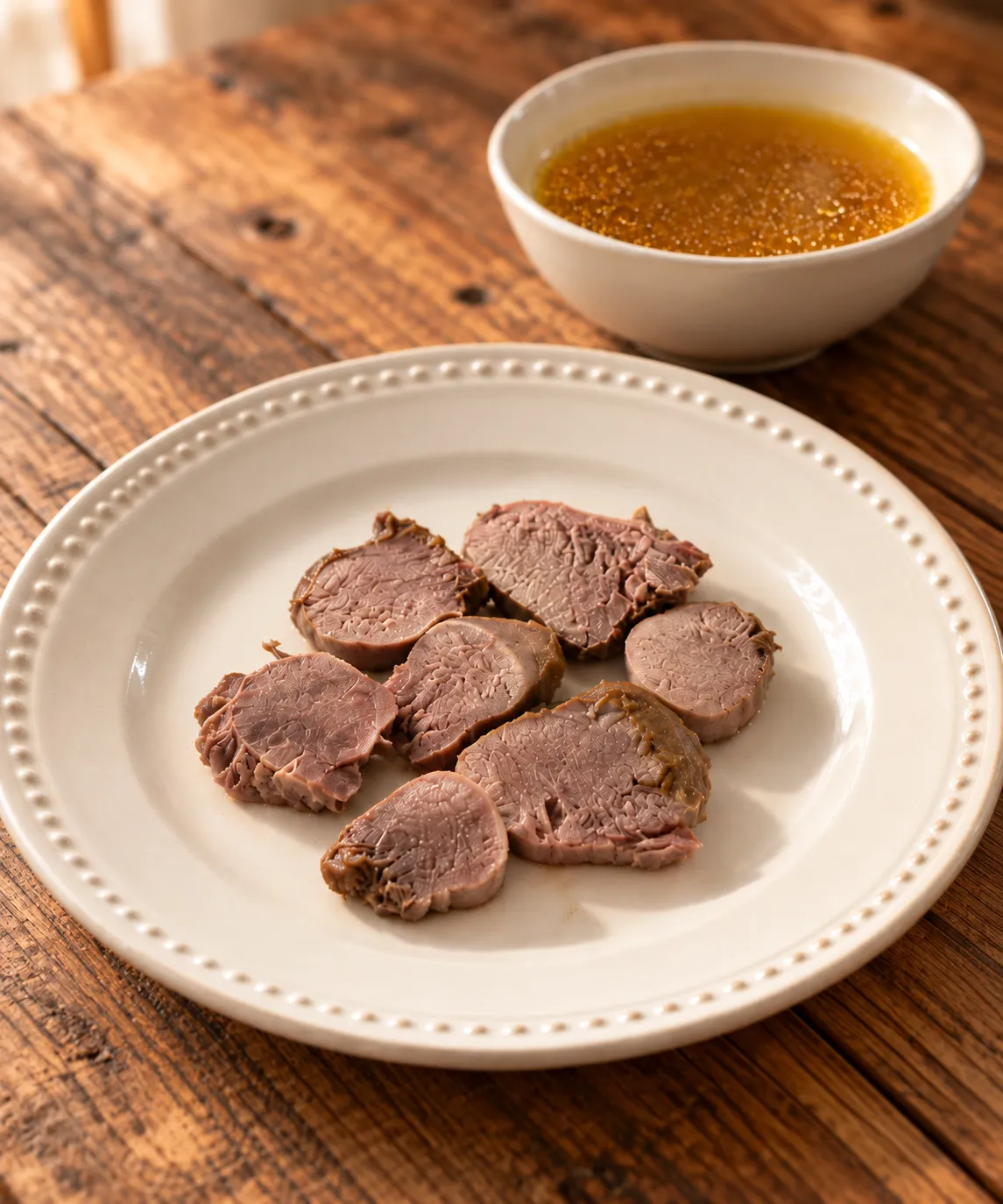
Lamb tongue sounds like it might be complicated, but it is actually one of the easiest slow-cooked foods I make for my kids. Most of the time is completely hands-off, you briefly boil the tongues, add them to the pot with onion, garlic, turmeric, and water, then let them simmer until tender.
Ingredients
- 2 lamb tongues
- 1 medium onion, chopped
- 1 tsp turmeric
- 1 garlic clove, crushed
- ¼ tsp black pepper, or to taste
- Good quality sea salt, to taste
- Filtered water, just enough to almost cover the tongues
- Fresh lemon juice, for serving
- Grass-fed butter, ghee, or another cooking fat, for the onion
This page contains affiliate links. I only recommend products I use and trust.
Why I love this recipe
This is one of those foods that sounds much more difficult than it actually is. The active work is really just chopping an onion, adding a few simple seasonings, letting the tongue simmer, then peeling and slicing it at the end. The pot does almost all the work. It is especially useful on busy days because once the tongue is simmering, you can mostly leave it alone for several hours.
Instructions
-
1
Bring a small pot of water to a boil. Add the lamb tongues and boil for 3 minutes.
-
2
Drain the tongues and set them aside.
-
3
Heat a little butter, ghee, or cooking fat in a heavy-bottomed pot over medium heat.
-
4
Add the chopped onion and cook until soft and translucent.
-
5
Add the turmeric and stir briefly.
-
6
Add the crushed garlic and cook for another few seconds.
-
7
Add the briefly boiled lamb tongues to the pot and sprinkle with black pepper.
-
8
Add enough filtered water to just about cover the tongues.
-
9
Bring to a gentle boil, then reduce the heat to low. Cover and simmer gently for about 3 hours.
-
10
About 1 hour before the tongues are finished cooking, add salt to taste.
-
11
When the tongues are very tender, remove them from the pot.
-
12
Peel off the outer skin while the tongues are still hot. This is important because the skin becomes much harder to remove after the tongue cools.
-
13
Slice or chop the peeled tongue.
-
14
Spoon some of the cooking liquid over the meat and add a little fresh lemon juice before serving.
How I Serve It
For my toddler
I slice the lamb tongue, spoon some of the cooking liquid over it, and finish it with a little fresh lemon juice.
For my 10-month-old
I cut the tongue into very small, soft pieces and put them back into some of the cooking liquid with a little lemon juice.
For little ones: Check carefully for any remaining tough skin or connective tissue before serving, and adjust the size and texture to your child's eating skills.
Recipe Notes
- Peel while hot: Do not wait for the tongues to cool completely. The outer skin is much easier to remove while the meat is still hot.
- Don't use too much water: Add only enough water to almost cover the tongues. This leaves you with a more flavorful cooking liquid to serve with the meat.
- Salt timing: Add the salt during the last hour of cooking.
- Lemon: Add fresh lemon juice after cooking, when serving.
Adaptations by Age
| Age | How to serve |
|---|
| 8 to 12 months |
Cut the tongue into very small, soft pieces and serve back in some of the cooking liquid with a little lemon juice. Check carefully for any tough skin or connective tissue. |
| Toddlers |
Slice the tongue, spoon some of the cooking liquid over it, and finish with fresh lemon juice. |
| Family |
Serve sliced with the cooking liquid and a generous squeeze of lemon. |
Storage
Why This Nourishes
🍖
Lamb Tongue
A nutrient-dense cut rich in iron, zinc, and B12, becoming meltingly tender after a long, gentle simmer
🍲
Slow-Cooked Broth
The gentle simmer draws out minerals and gelatin, giving the cooking liquid a rich body worth spooning back over the meat
🍋
Lemon
A finishing squeeze of lemon adds brightness and balances the richness of the slow-cooked meat
🌿
Turmeric
A traditional warm spice used throughout Persian everyday cooking, adding depth and color to the broth
The content on this site is based on personal experience and research and is intended for informational purposes only. It is not a substitute for professional medical advice, diagnosis, or treatment. Always consult your pediatrician or a qualified healthcare provider before introducing new foods or making changes to your baby's diet.