This page contains affiliate links. I only recommend products I use and trust.
What is Loobia Polo?
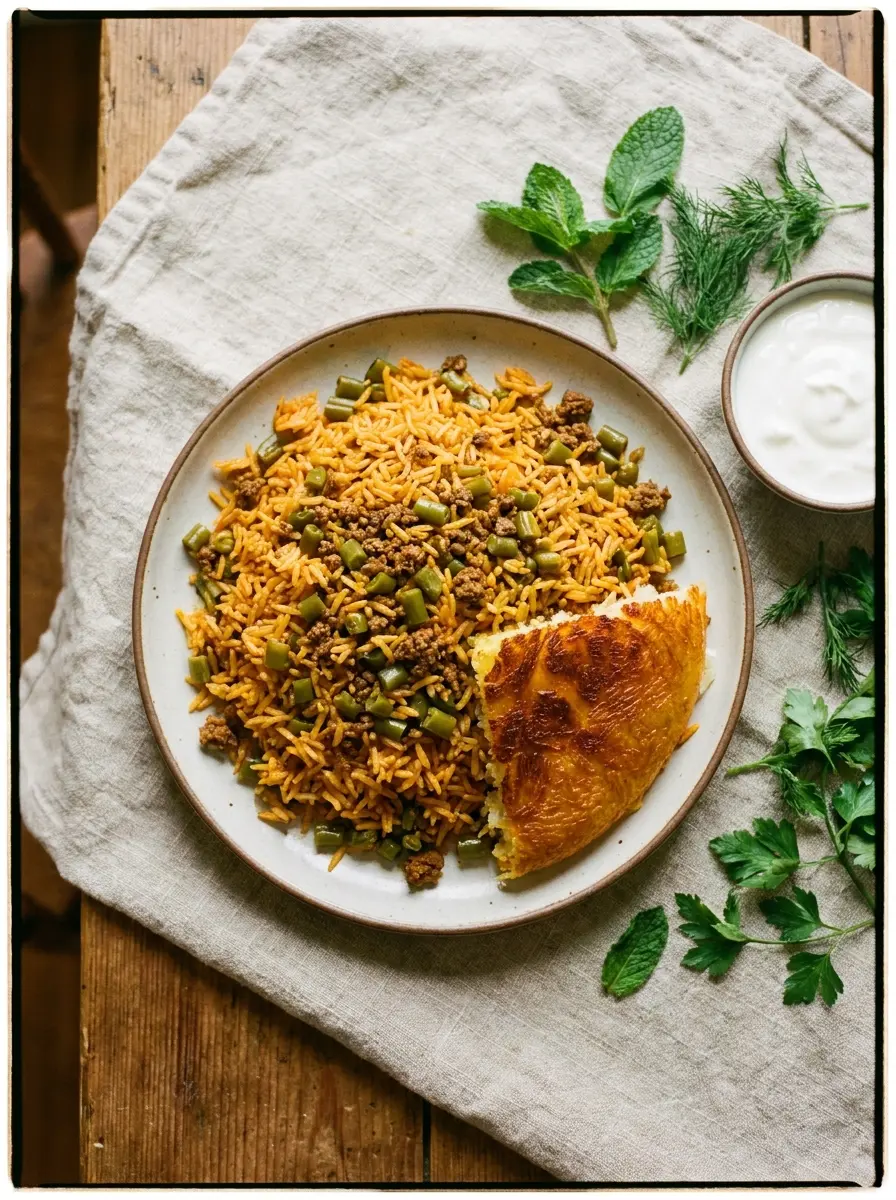
Loobia polo is a Persian layered rice dish. Green beans and beef simmer together with tomato, turmeric, and a touch of cinnamon, then layer with parboiled basmati rice and steam together until the rice is fluffy and a golden tahdig forms at the bottom. This version keeps the traditional flavors simple and offers an easy shortcut with frozen green beans, which makes it genuinely doable on a busy weeknight rather than something reserved for special occasions.
Instructions
Soak the rice
-
1
Rinse the basmati rice several times until the water runs mostly clear. Place the rice in a large bowl and cover generously with filtered water. Add a good pinch of salt and soak for 30 minutes to 1 hour while you prepare the rest of the dish.
Prepare the green beans
-
2
If using fresh green beans, trim the ends and cut into bite-sized pieces. Steam for 5 to 7 minutes until just tender but still slightly chewy. They will continue cooking later, so do not overcook them. If using frozen green beans, there is no need to steam them first. Thaw if convenient or use directly from frozen.
Cook the onion and beef
-
3
Heat the butter or ghee in a large skillet or pot over medium heat. Add the onion and cook for 8 to 10 minutes, stirring occasionally, until softened and lightly golden. Add the turmeric and stir for about 30 seconds.
-
4
Add the ground beef or lamb and cook, breaking it apart with a wooden spoon, until browned and fully cooked through. Season with salt and black pepper.
Add the tomato and green beans
-
5
Add the tomato paste and stir it into the meat. Cook for 2 to 3 minutes, stirring frequently. This cooks the raw taste out of the tomato paste and deepens the flavor. Add ½ cup filtered water and stir.
-
6
Add the steamed fresh green beans or the frozen green beans to the meat mixture. Stir gently and cover. Reduce heat to low and cook for 10 to 15 minutes, allowing the flavors to come together. The mixture should be moist but not watery. If there is too much liquid, remove the lid and let it cook a few more minutes. Stir in the cinnamon during the last few minutes of cooking, then taste and adjust the salt if needed.
Parboil the rice
-
7
Bring a large pot of filtered water to a rolling boil and salt the water generously. Drain the soaking water from the rice and add the rice to the boiling water. Cook for about 6 to 8 minutes, depending on your rice, until it is soft on the outside but still slightly firm in the center. Drain the rice well.
Layer and steam the loobia polo
-
8
Return the empty pot to the stove and add 2 to 3 tablespoons of butter, ghee, or oil to the bottom. We use our Our Place pot for this layering step. If making tahdig, arrange thin potato slices or pieces of lavash on the bottom. This step is entirely optional. If you skip it, simply add the butter and go straight to layering the rice.
-
9
Add a layer of rice, followed by a layer of the green bean and beef mixture. Continue alternating layers, finishing with rice on top. Do not stir the layers together yet, they will come together as the rice steams.
-
10
Use the handle of a wooden spoon to make several holes through the rice, allowing steam to circulate. If using saffron, drizzle the brewed saffron water over the top. Cover the pot and cook over medium-high heat for about 5 minutes to build up steam, then reduce the heat to low and cook for another 30 to 40 minutes, until the rice is fluffy and the tahdig is golden.
Optional Persian method: For extra fluffy rice, wrap the lid in a clean kitchen towel before covering the pot. The towel absorbs excess steam and helps prevent water from dripping back onto the rice. This step is completely optional. If you are not familiar with this technique, simply cover the pot with its regular lid and steam the rice as usual. If using a kitchen towel, make sure it is secured well away from the burner or any flame.
Serving Suggestions
- Plain full-fat yogurt
- Cucumber yogurt dip (Mast-o Khiar)
- Shirazi salad, a simple cucumber and tomato salad
- Fresh herbs
- Persian pickled vegetables (Torshi)
- And the tahdig, if you made it
Adaptations by Age
| Age | How to serve |
|---|
| 12 to 18 months |
Make sure the green beans are very soft and cut into small pieces. Break the meat into very small pieces. Mix the rice, meat, and beans together to make it easier to eat. Serve with plain full-fat yogurt. Avoid adding extra salt to the child's portion. |
| 18 months+ |
Serve as is, making sure the green beans are soft enough for your child's chewing ability. The slight sweetness from the tomato and cinnamon tends to make this particularly appealing to kids. |
| Family |
Serve everyone the same meal straight from the pot, with yogurt, herbs, and torshi alongside. |
Storage
Tips
- Frozen green beans are absolutely fine. You do not need to feel like you have to buy and trim fresh green beans every time you make loobia polo. Fresh is wonderful when you have it, but frozen is the shortcut, not a compromise.
- Do not overcook fresh green beans before adding them to the stew. You want them tender but still slightly chewy. If using frozen, avoid cooking them until mushy.
- Fry the tomato paste for a couple of minutes before adding water. It makes a noticeable difference in flavor.
- Do not make the beef mixture too watery. Excess liquid will make the finished rice heavy.
- Keep the cinnamon subtle. You want it to add warmth without making the dish taste sweet.
- Saffron is wonderful but completely optional, as is the kitchen-towel technique.
- If you can find it, choose grass-fed and grass-finished beef or lamb. It makes a genuine difference in flavor and nutrition, though conventional ground meat works perfectly well too.
Why This Nourishes
🥩
Grass-Fed Beef or Lamb
Provides iron, zinc, and B12 in highly bioavailable forms alongside a better omega-3 to omega-6 ratio than conventional grain-finished meat
🫘
Green Beans
A good source of fiber, vitamin C, and vitamin K, adding both nutrition and texture to the dish
🌿
Turmeric and Cinnamon
Traditional Persian spices with gentle anti-inflammatory properties, best absorbed alongside the fat in this dish
The content on this site is based on personal experience and research and is intended for informational purposes only. It is not a substitute for professional medical advice, diagnosis, or treatment. Always consult your pediatrician or a qualified healthcare provider before introducing new foods or making changes to your baby's diet.