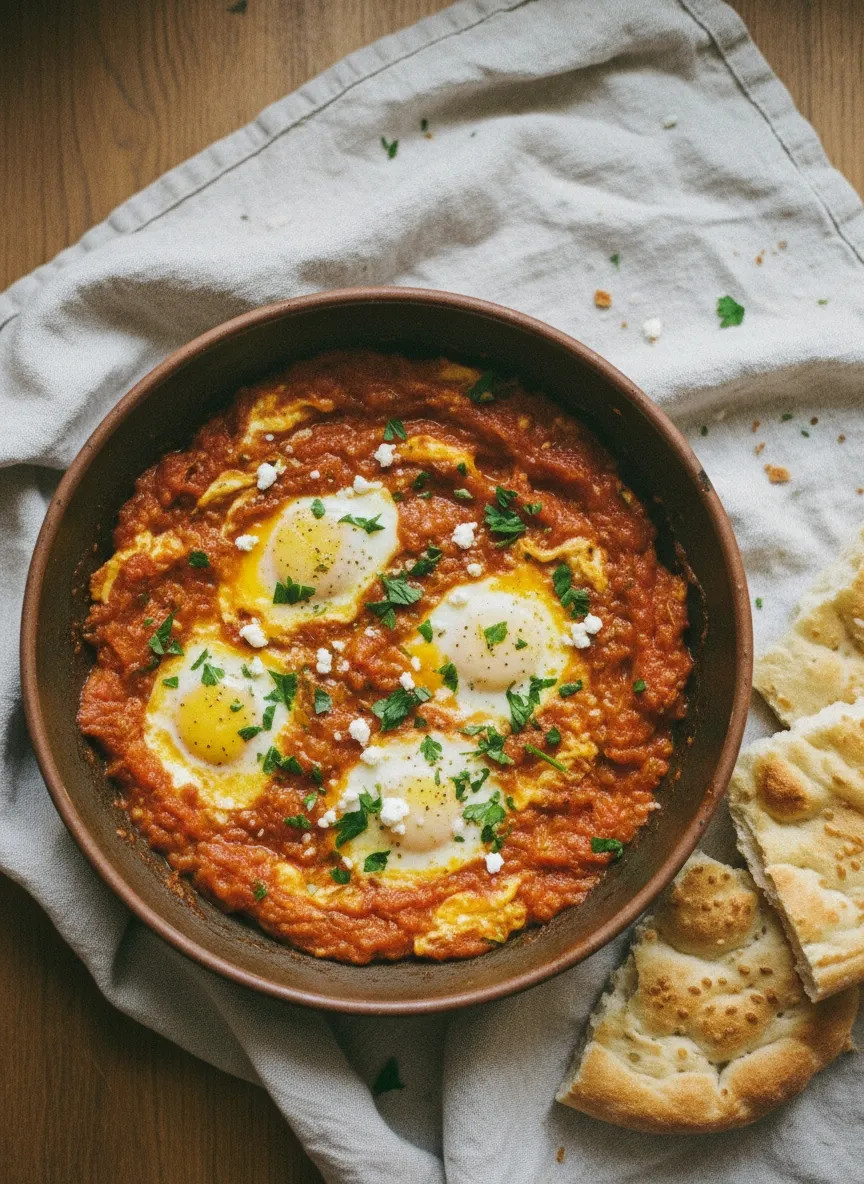
Omelet Gojeh Farangi — the Persian tomato omelet
The name "Gojeh Farangi" means "foreign tomato" in Persian — a reminder that tomatoes were brought to Iran in the 18th century by the Qajar dynasty and quickly became central to Persian cooking. Today omelet gojeh farangi is one of the most beloved breakfast dishes in Iran. The secret is patience with the tomatoes. Let them cook slowly until they break down into a thick, jammy sauce, and the result is something far greater than the sum of its parts.
Instructions
- 1Cook the onions. Heat the butter, ghee, or olive oil in a large skillet over medium heat. Add the onion and cook for 10 to 12 minutes, stirring occasionally, until soft and lightly golden. Add the garlic and cook for another 30 seconds.
- 2Build the tomato base. Stir in the turmeric. If using tomato paste, add it now and cook for 1 to 2 minutes to caramelize slightly. Add the tomatoes and stir well. Reduce the heat to medium-low and cook for 15 to 20 minutes, stirring occasionally, until the tomatoes have broken down into a thick, jammy sauce. The mixture should no longer be watery.
- 3Add the eggs. Crack the eggs directly over the tomato mixture. Using a spatula, gently stir just enough to lightly combine the yolks with the tomatoes. Cook over low heat for 3 to 5 minutes, stirring occasionally, until the eggs are softly set and creamy. Do not overcook — the eggs should stay tender.
- 4Finish and serve. Season with salt if using. Garnish with fresh parsley or chives and crumbled feta for older children and adults. Serve immediately with warm bread.
The most important step: Let the tomatoes cook down slowly — 15 to 20 minutes — until they are thick and jammy with no watery liquid remaining. This is the secret to an exceptional omelet gojeh farangi. Rushing this step is the only way to get it wrong.
Authentic Persian Variations
Classic
Tomatoes, eggs, turmeric, salt, and oil. The most minimal version — four ingredients and extraordinary flavor.
With Onion
Many families begin by slowly sauteing onions before adding the tomatoes. This adds natural sweetness and depth.
With Garlic
A couple of garlic cloves add another layer of flavor. Some households include it, others leave it out entirely.
With Tomato Paste
A small spoonful deepens the color and flavor — especially useful when tomatoes are not at their summer peak.
Traditional Serving Suggestions
- Warm sangak, barbari, or sourdough bread
- Fresh cucumbers
- Fresh herbs (sabzi khordan)
- Crumbled feta cheese for older children and adults
- Olives alongside
- A wedge of fresh lemon
- Persian tea
Adaptations by Age
| Age | How to serve |
|---|
| 9–12 months | Omit salt. Cook eggs until softly set and creamy — the thick tomato sauce keeps them moist. Chop or mash into small pieces. Serve with soft avocado, plain yogurt, or sourdough toast fingers. |
| 12 months+ | Serve with soft bread for dipping. Add a small sprinkle of feta if dairy has been introduced. |
| Family | Full serving with all accompaniments — bread, fresh herbs, feta, cucumbers, and olives. The classic Persian breakfast spread. |
Storage
🧊 Fridge
Up to 2 days in an airtight container. Reheat gently over low heat with a splash of water to keep the eggs from drying out.
🍅 Make ahead tip
The tomato sauce can be made up to 2 days ahead and refrigerated. Add eggs fresh just before serving for the best result.
Tips
- Use the ripest tomatoes you can find — the quality of the tomatoes determines the quality of the omelet. In winter, San Marzano canned tomatoes crushed by hand often produce a better result than out-of-season fresh ones.
- Do not rush the tomato reduction — 15 to 20 minutes of slow cooking is what transforms raw tomatoes into a deep, concentrated sauce.
- Butter or ghee gives a richer flavor than olive oil — though either works beautifully.
- Stir the eggs gently — just enough to lightly combine them with the tomatoes. You want soft, creamy ribbons of egg running through the sauce, not fully scrambled eggs.
- Remove the pan from the heat while the eggs still look slightly underdone — they will continue cooking from the residual heat of the sauce.
- The tomato sauce can be made ahead and refrigerated for up to 2 days. Add the eggs fresh just before serving.
Making it Fun
🍞 The bread ritual — omelet gojeh farangi is always eaten with bread in Iran. Tearing warm sangak or barbari and scooping up the egg and tomato is part of the experience. For toddlers, soft bread torn into pieces for dipping makes this an interactive and enjoyable meal.
🥚 Same pot, every age — everyone eats from the same pan. Baby gets a small portion chopped fine, toddlers get theirs with bread, adults get the full spread with feta and herbs. One dish, one table, no separate cooking.
🌿 Weekend breakfast — this is the kind of dish that deserves a slow weekend morning. Make it with Persian tea, fresh herbs, feta, and warm bread. The whole family at the same table eating the same food — that is the spirit of Persian breakfast.
Why This Nourishes
🧠Choline
Eggs are one of the richest dietary sources of choline — essential for brain development, memory, and nerve communication in the first years of life
💪Complete Protein
Eggs provide all nine essential amino acids — the most bioavailable protein source available for growing babies and toddlers
🍅Lycopene
Slow-cooking tomatoes increases the availability of lycopene — a powerful antioxidant absorbed best when cooked with fat
🌿Vitamin C
Tomatoes are rich in vitamin C — which enhances iron absorption when eaten alongside iron-rich foods and supports immune function
🔥Turmeric
A traditional anti-inflammatory spice used across Persian cooking for centuries — absorbed best when eaten with fat
The content on this site is based on personal experience and research and is intended for informational purposes only. It is not a substitute for professional medical advice, diagnosis, or treatment. Always consult your pediatrician or a qualified healthcare provider before introducing new foods or making changes to your baby's diet.