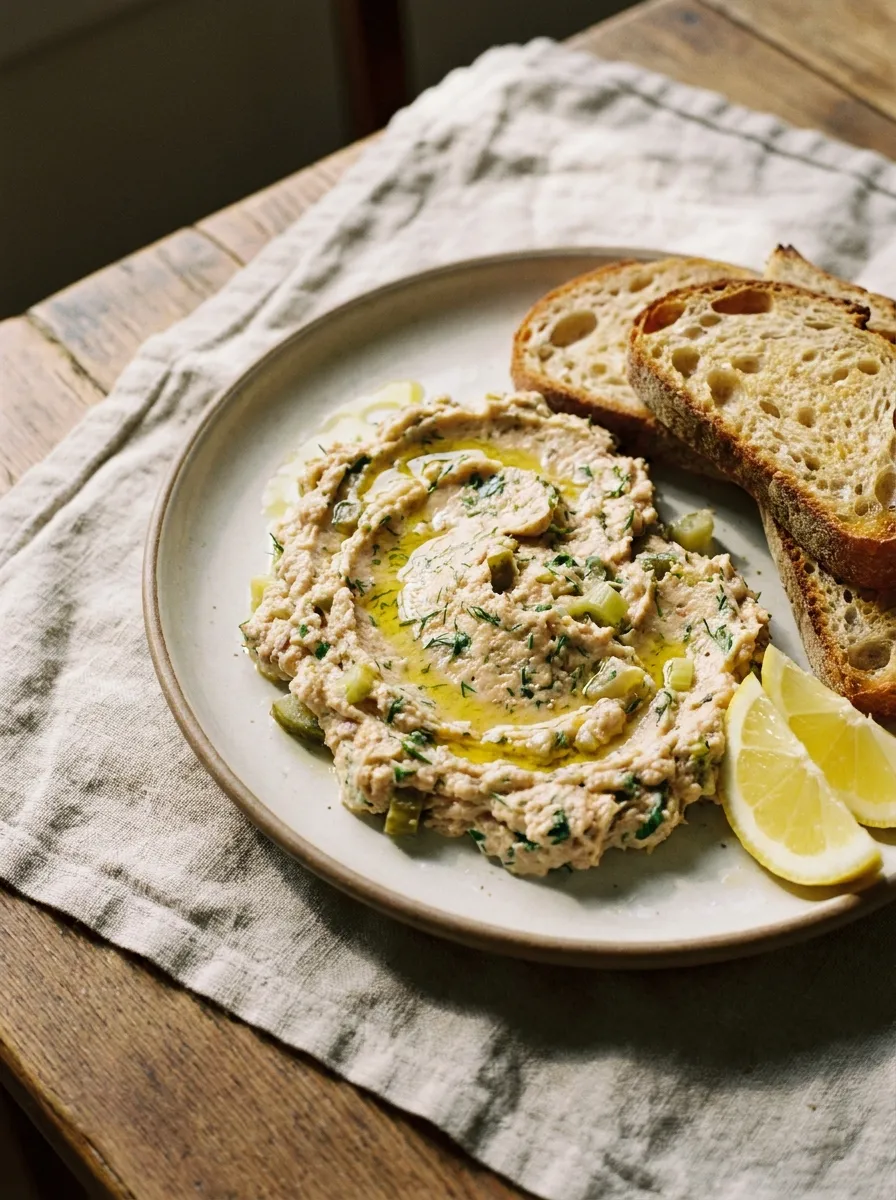
Why sardines?
Sardines are one of the most nutrient-dense and sustainable fish you can buy — and one of the most underrated baby foods. They are naturally low in mercury because of their small size and short lifespan, making them one of the safest fish for babies and young children. A single can contains meaningful amounts of omega-3 fatty acids, calcium, vitamin D, vitamin B12, iron, selenium, and choline. This pate transforms them into a creamy, spreadable format that babies and toddlers accept easily — the butter mellows any sharpness, and the lemon, pickles, and celery keep the flavor bright and fresh.
Instructions
- 1Check for bones. Open the sardines and transfer to a bowl. Run your fingers through the flesh to check for any remaining bones and remove them. The soft, small bones are edible and a good source of calcium — but for younger babies and a smoother pate, remove them all.
- 2Mash and combine. Using a fork, mash the sardines thoroughly until broken down. Add the softened butter and mash again until well combined. Add the finely grated onion, finely grated garlic, lemon juice, diced pickles, diced celery, and black pepper if using. If using a hard-boiled egg, mash it in now. Add any optional herbs if using. Mix well with a fork until everything is fully incorporated.
- 3For a smoother texture, transfer to a food processor or use an immersion blender and blend until completely smooth. This is recommended for babies under 12 months.
- 4Chill. Transfer to an airtight glass container and refrigerate for at least 30 minutes. Chilling allows the flavors to meld and the butter to firm up the texture into a proper spreadable pate.
Bone safety note: Always check sardines carefully for bones before serving to babies and young toddlers. Even canned sardines labeled boneless can contain small bones. Run your fingers through the flesh before mashing and remove every bone you find.
How to Use It
9–12 Months
- Spread on soft sourdough toast fingers
- Mix into warm mashed potato
- Stir into soft scrambled eggs
- Spread on soft rice cakes
- Mix into mashed avocado
- Stir into warm soft pasta
Toddlers
- Spread on sourdough toast or crackers
- Fill a soft sandwich with cucumber slices
- Mix into scrambled eggs
- Serve as a dip with vegetable sticks
- Stir into pasta with olive oil
- Serve alongside sliced avocado
Whole Family
- Make the mayo version for a richer adult spread
- Add a splash of apple cider or rice vinegar for extra tang
- Spread on sourdough with cornichons and capers
- Serve on crackers with a squeeze of lemon
- Use as a sandwich filling with fresh greens
Adaptations by Age
| Age | How to serve |
|---|
| 9–12 months | Blend completely smooth. Use butter version. Omit mustard and vinegar. Spread on soft toast fingers or mix into mashed potato or avocado. Portion about 1 to 2 tbsp per serving. |
| 12–18 months | Can be served slightly chunkier. Spread on soft toast or stir into familiar foods. |
| 18 months+ | Serve as a spread with a variety of vehicles — toast, crackers, rice cakes, vegetable sticks. Mustard can be added for older children. |
| Adults | Replace butter with 2 to 3 tbsp good quality mayonnaise for a richer, tangier spread. Add ¼ to ½ tbsp apple cider vinegar or rice vinegar to taste, Dijon mustard, and extra herbs. Serve on sourdough or rye with fresh lemon. |
Storage
🧊 Fridge
Up to 2 days in an airtight glass container. Press a piece of parchment paper directly onto the surface to prevent oxidation and keep it fresh.
❄️ Freezer
Up to 1 month. Freeze in small portions using an ice cube tray, then transfer to a freezer-safe container. Thaw overnight in the fridge.
Tips
- Always check for bones before mashing — run your fingers through the sardine flesh carefully and remove every bone you find, especially when cooking for babies.
- Choose wild sardines in olive oil with no added salt — the ingredient list should be short: sardines and olive oil.
- For the baby and toddler version, use softened grass-fed butter — it creates a mild, creamy texture that most children accept easily.
- For the adult version, replace the butter with 2 to 3 tablespoons of good quality mayonnaise and add ¼ to ½ tbsp apple cider vinegar or rice vinegar to taste. This makes a richer, tangier spread.
- Adding a hard-boiled egg makes the pate creamier and higher in protein — mash it in with a fork along with the sardines.
- Softened butter at room temperature blends much more smoothly than cold butter — take it out of the fridge 30 minutes before making the pate.
- Chilling for at least 30 minutes is important — it firms up the texture and allows the flavors to meld. The pate is noticeably better after resting.
- Pair with vitamin C-rich foods like lemon juice, bell pepper, or fresh tomatoes to enhance iron absorption from the sardines.
Making it Fun
🍞 Toast soldiers — spread the pate on soft sourdough toast cut into fingers. This is one of the best ways to introduce sardines to babies who are just starting finger foods. The butter and lemon make the flavor mild and appealing even for cautious eaters.
🥑 Sardine and avocado mash — mix a tablespoon of sardine pate into mashed avocado for younger babies. The avocado softens the flavor further and adds healthy fats alongside the omega-3s from the sardines. One of the most nutrient-dense combinations you can offer.
🐟 A pantry staple — keep a batch in the fridge and you have a complete, protein-rich meal ready in seconds. Spread on toast, stir into eggs, mix into pasta — sardine pate is one of the most versatile no-cook additions to any family kitchen.
Why This Nourishes
🧠Omega-3 DHA
Sardines are among the richest dietary sources of DHA and EPA — essential fatty acids for brain development, vision, and nervous system function
🦴Calcium
Sardines with bones are one of the best non-dairy sources of calcium — critical for bone development in the first years of life
☀️Vitamin D
Sardines contain more vitamin D per serving than almost any other food — essential for calcium absorption, immune function, and bone health
⚡Vitamin B12
Essential for nervous system development and red blood cell production — sardines are one of the richest dietary sources available
🌿Low Mercury
Because sardines are small and short-lived, they accumulate very little mercury — making them one of the safest fish choices for babies and young children
The content on this site is based on personal experience and research and is intended for informational purposes only. It is not a substitute for professional medical advice, diagnosis, or treatment. Always consult your pediatrician or a qualified healthcare provider before introducing new foods or making changes to your baby's diet.